1 Kasım 2026Games
Futures Position P&L Game: Same Result, Different Journey
Play a free futures position game and discover why the same gross P&L can hide different quantity and protection events. No signup required.
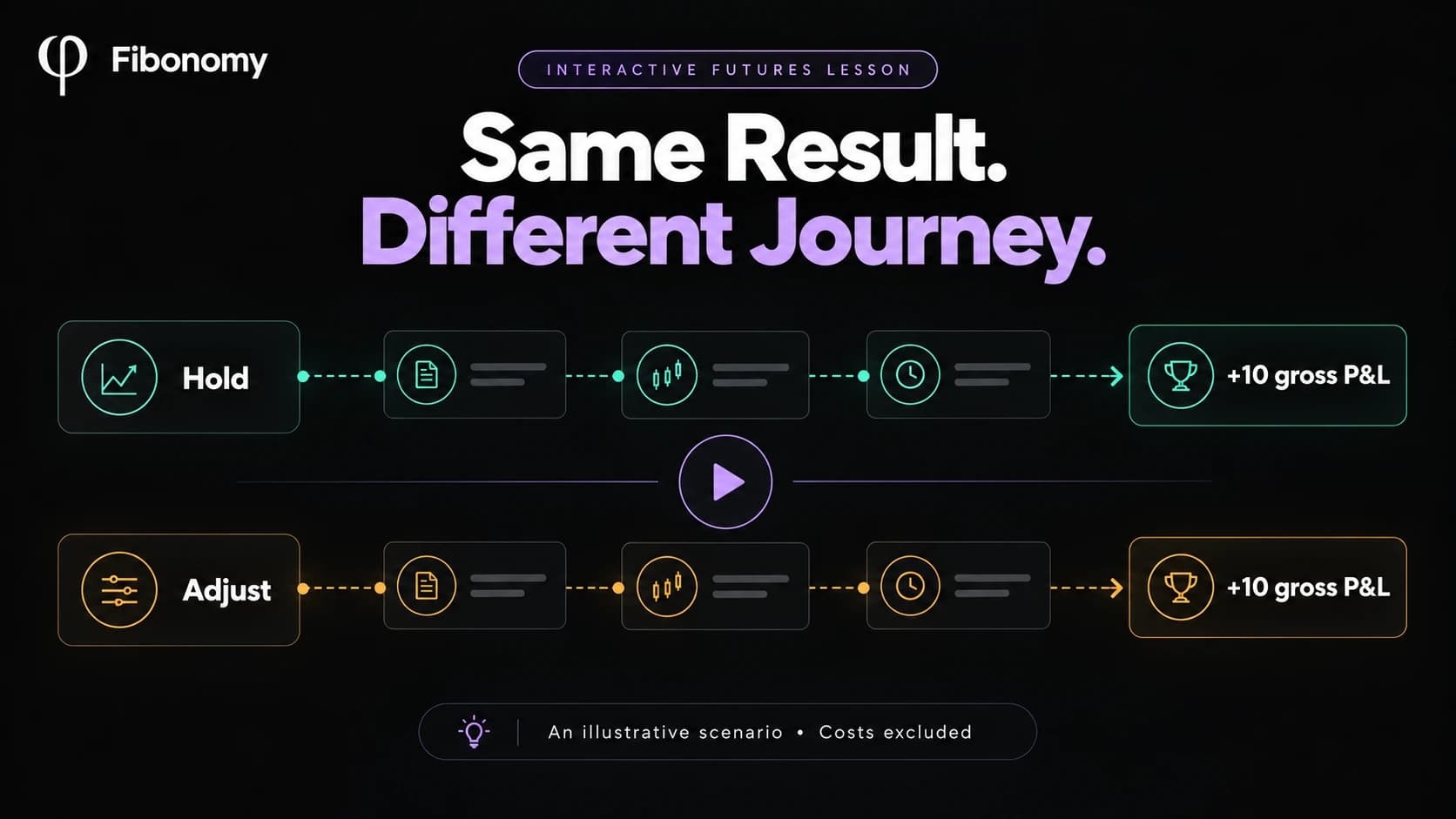
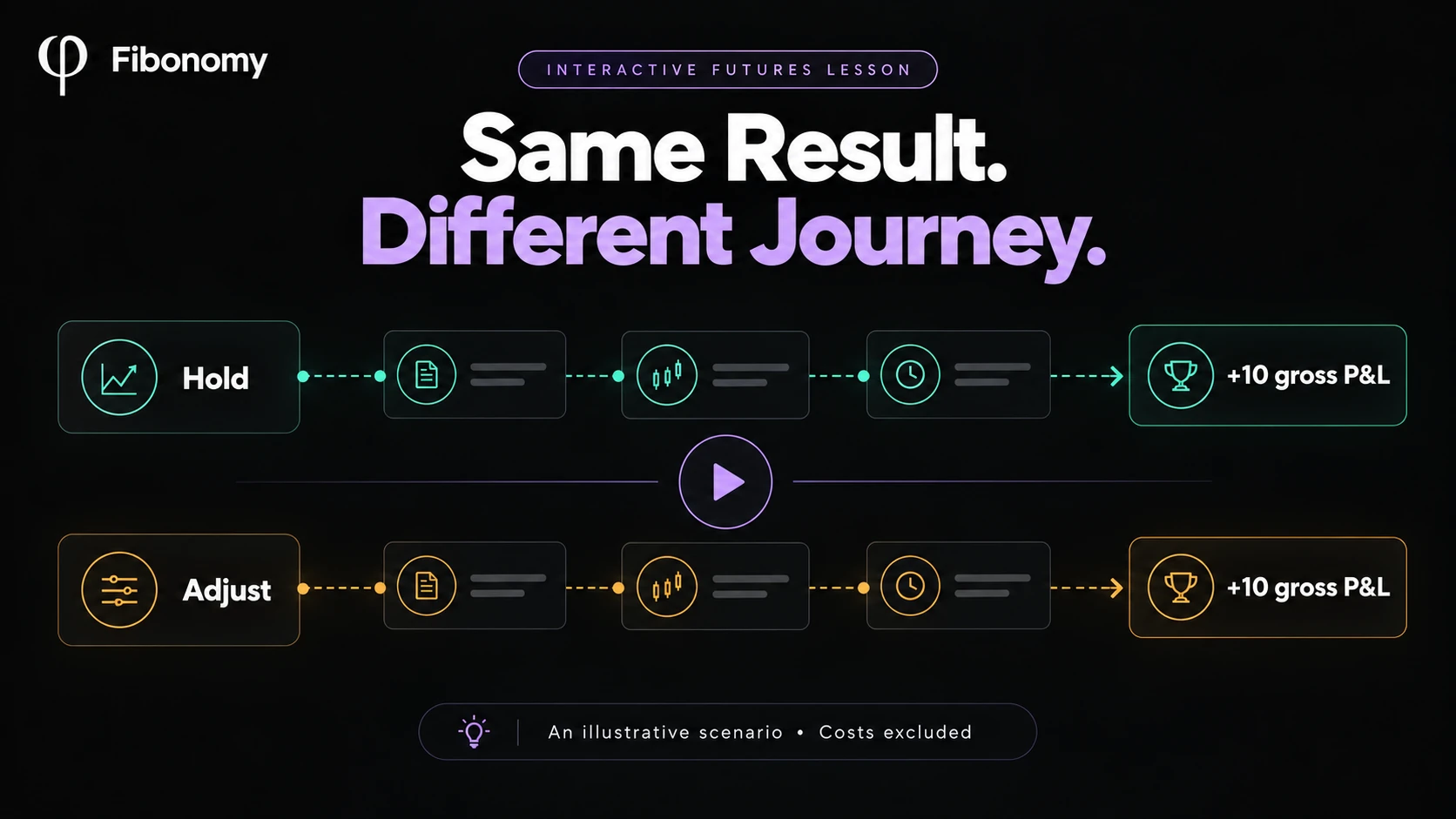
Two futures positions can finish with the same gross profit and still have different histories of quantity and protection. Final P&L describes the result. The sequence of events helps explain how it happened.
Play the free futures position P&L game. No registration, exchange connection or real funds are needed.
Part of Fibonomy Games: interactive futures lessons.
What will you learn?
In this short interactive lesson, two long positions follow the same illustrative prices: 100, then 90, then 110. You predict how quantity differs during the drawdown and reconstruct the events in one position's history. Learning points reward understanding, not profit.
The game separates the market price change from a change to the position. It also distinguishes a recorded stop trigger from an executed exit. You can replay the same authored path to examine the sequence again.
One result, two position journeys
The first position opens one unit at 100 and holds until 110. Its gross result is +10 quote units.
The second opens half a unit at 100, adds a quarter unit at 90 and closes all lots at 110. The first lot contributes +5 and the added lot contributes +5. Its gross result is also +10 quote units, although its quantity changed along the way.
The arithmetic uses a simplified linear long-position relationship: quantity × (exit price − entry price). Binance documents this relationship for USDⓈ-margined futures P&L estimates. This lesson uses generic base-asset units and quote currency per unit; it does not reproduce Binance's account, execution or margin rules.
A stop trigger at 80 is recorded in the second journey. The authored path never reaches it. The lesson does not simulate stop execution or prove that either journey is a better trading strategy.
For the effect of adding quantity on entry price, read what happens to average entry after adding to a futures position.
Follow the process behind P&L
Look at an event, then the position state it changes, then the consequences the model can actually represent. A final number cannot tell you when size increased or which protection events occurred.
This prototype shows position quantity, event order and gross position P&L. It does not simulate account balances, fees, funding, slippage, leverage, margin or liquidation. The figures are fictional teaching inputs, not market quotations.
Review a real position with the same questions
Ask what opened the position, what changed its size, what protection changed and how it closed. Reconcile the outcome and costs separately from those decisions. The crypto futures trading journal guide explains that review workflow.
Questions about the game
Is this a trading simulator connected to an exchange?
No. It is a fixed educational scenario with fictional units and no orders or exchange connection.
Can I play without signing up?
Yes. The complete lesson and replay are available without registration.
Does equal P&L mean equal risk?
No. Equal gross results do not establish the same exposure history. This model does not calculate a complete account-risk history, so it does not rank the two journeys by overall risk.
Is the result net of trading costs?
No. It is gross P&L. Fees, funding and other execution costs are excluded. This game does not promise profits or loss prevention.
Start the interactive position journey.
Model sources
Primary documentation checked on 2 November 2026: Binance Futures Calculator and futures profit and loss calculations. The game implements only the scoped linear gross P&L relationship. Actual contract rules, price bases and costs require a separate reconciliation.